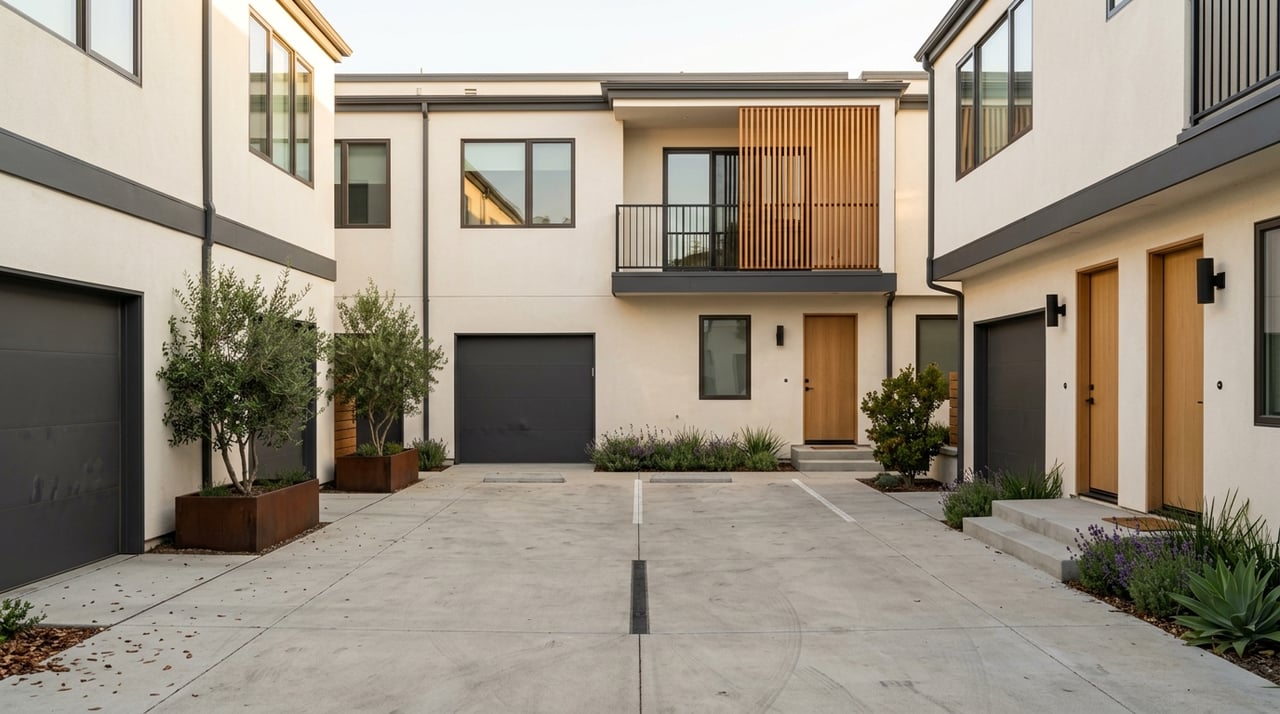
If you are shopping for a condo or townhome in Canyon Country, one of the biggest mistakes you can make is thinking every community offers the same experience. Two homes with similar prices can come with very different HOA rules, parking setups, floor plans, and monthly responsibilities. The good news is that once you know what to compare, you can choose a community that fits your routine and your budget with a lot more confidence. Let’s dive in.
Canyon Country Is Really HOA Shopping
In Canyon Country, attached-home buyers are often choosing between distinct HOA communities rather than one uniform condo market. Local examples show a wide mix, from 1990s-era communities like Princessa Estates, Canyon Park Village, and Canyon Park Carriage Homes to newer townhome product such as Lost Canyon.
That matters because community age often lines up with differences in layout, garage style, parking rules, and how much maintenance the HOA handles. In other words, the Canyon Country address may sound the same, but the ownership experience can feel very different from one community to the next.
Compare More Than Monthly Dues
It is easy to focus on the HOA fee first, but the monthly number alone does not tell you enough. A lower fee is not automatically a better value if it comes with less maintenance coverage, weaker reserves, or future assessment risk.
California law requires the seller of a condo or townhome in a common-interest development to provide key documents to the buyer. These can include governing documents, annual disclosures, a statement of current assessments, notice of unresolved violations, any disclosed rental prohibition, approved assessment changes that are not yet due, and the most recent inspection report required under Civil Code section 5551.
HOA Documents To Review
Before you choose a Canyon Country condo or townhome community, make time to review:
- CC&Rs
- Rules and regulations
- Annual budget report
- Annual policy statement
- Current assessment information
- Insurance summary
- Reserve-related disclosures
- Pending or recent special assessments
- Recent board meeting minutes, if requested
The practical takeaway is simple. Read the actual HOA documents, not just the listing remarks. A community like Princessa Estates publicly notes that homeowners are governed by CC&Rs plus condominium rules and regulations, which is a good reminder that each HOA has its own structure and requirements.
Parking Can Make Or Break Daily Life
In Canyon Country, parking is often one of the biggest real-world differences between communities. Recent local listings show attached two-car garages, direct-access garages, tandem garages, and communities where guest parking is a major feature.
That means your question should not just be, “How many spaces do I get?” It should also be, “What kind of spaces are they?” A tandem garage may work well for some households, while others need side-by-side parking for convenience, storage, or multiple drivers.
Parking Questions To Ask
As you compare communities, ask:
- Is the garage attached or detached?
- Is the garage direct-access?
- Are the spaces tandem or side-by-side?
- Is there assigned guest parking, open guest parking, or limited guest parking?
- Will the setup work for your daily routine, not just move-in day?
Parking can also affect resale appeal. A direct-access two-car garage may feel very different from a tandem setup if you have bikes, strollers, sports gear, or just want simpler everyday access.
Transit Access May Matter More Than You Think
If you commute regularly, community location can matter beyond the home itself. Metrolink’s current station map includes Via Princessa, Santa Clarita, Newhall, and Vista Canyon, giving some buyers another factor to weigh when comparing condo and townhome communities.
Santa Clarita planning documents for Vista Canyon also describe a mixed-use, pedestrian-oriented parking strategy that uses shared and non-shared parking within the development. For buyers who want to reduce driving or keep commute options open, transit access and parking design deserve a closer look.
Match Amenities To Your Real Lifestyle
Amenities can look great in listing photos, but the better question is whether you will actually use them. Canyon Country communities vary widely, with examples that include pools, spas, playground areas, clubhouse features, walking areas, greenbelts, community parking, security, and HOA coverage for items like water, trash, sewer, and exterior maintenance.
For example, recent community examples show American Beauty offering multiple pools and spas along with HOA-covered water, trash, sewer, and exterior maintenance. Other communities such as Canyon Park Carriage Homes, Lost Canyon, and Princessa Estates highlight combinations of pool, spa, clubhouse, and common-area features.
Amenities Worth Comparing
When you tour communities, think about:
- Whether you want resort-style amenities or a simpler setup
- How much of the HOA fee is tied to amenities versus maintenance
- Whether water, trash, sewer, or exterior maintenance are included
- How often you would realistically use features like pools, spas, or clubhouse space
The goal is not to find the community with the longest feature list. It is to find the one that supports your day-to-day life without paying for things you will rarely use.
Floor Plan Fit Matters Every Day
Canyon Country attached homes come in several common layouts. Recent listings show 2-bedroom, 2-bath condos, 2-bedroom, 2.5-bath townhomes, 2-bedroom-plus-loft plans, 3-bedroom, 2-bath upper or lower units, and tri-level townhomes with balconies or patios.
Older communities such as Canyon Park Village and Canyon Park Carriage Homes often show 1990 to 1991-era footprints around 960 to 1,419 square feet. Newer-feeling communities such as Lost Canyon show 3-bedroom, 2-bath homes around 1,280 square feet with direct-access garages. MetroWalk planning has also identified for-sale townhome types ranging from 2-bedroom, 2.5-bath layouts to larger 3-bedroom plans.
Think Beyond Bedroom Count
A floor plan can look good online and still miss the mark in real life. Ask yourself:
- Do you need main-level living or are stairs fine?
- Will a loft work as a real office?
- Do you need a patio, balcony, or extra storage?
- Is there enough room for pets, hobbies, or guests?
- Will the garage hold cars and still leave room for storage?
These details shape how comfortable a home feels after the first week of ownership. Often, the best layout is the one that quietly makes everyday life easier.
Rental Rules And Future Flexibility
Even if you plan to live in the home for years, it is smart to think ahead. California law requires disclosure when a governing document prohibits rentals, which makes rental restrictions an important part of your review.
This does not only matter to investors. If your job changes, you relocate, or your housing plans shift later, rental rules could affect your options. That is why future flexibility should be part of your community comparison from the start.
A Simple Way To Compare Communities
When you are deciding between Canyon Country condo and townhome communities, it helps to compare them with the same checklist each time.
Your Canyon Country Community Checklist
- HOA dues and what they cover
- CC&Rs and community rules
- Reserve-related disclosures and annual budget report
- Current or pending special assessments
- Rental restrictions or lease limits
- Garage type and parking convenience
- Guest parking availability
- Floor plan function for your routine
- Amenities you will actually use
- Commute access, including nearby Metrolink options if relevant
This kind of side-by-side review keeps you focused on value, not just price. It also helps you avoid surprises after closing.
Why Local Guidance Helps
Because Canyon Country attached-home shopping is so community-specific, local context matters. Two nearby communities may look similar in a search, but their rules, maintenance coverage, parking setups, and layout options can point you in very different directions.
That is where calm, neighborhood-level guidance can make the process easier. When you understand how a community functions, not just how a unit photographs, you are better positioned to make a decision that feels right both now and later.
If you are weighing condo or townhome options in Canyon Country, the right fit is usually the community that matches your routine, not just your price range. For practical local guidance as you compare HOAs, parking, amenities, and floor plans, connect with the Stephanie Paige Group.
FAQs
What should you compare between Canyon Country condo communities?
- Compare HOA dues, what the HOA maintains, CC&Rs, parking type, guest parking, amenities, floor plan fit, reserve-related disclosures, and any special assessments or rental restrictions.
What HOA documents should you review before buying a Canyon Country townhome?
- Review the CC&Rs, rules and regulations, annual budget report, annual policy statement, current assessments, insurance summary, reserve-related disclosures, and any available board minutes or inspection-related disclosures.
Why is parking so important in Canyon Country condo and townhome communities?
- Parking setups vary widely and can include tandem garages, attached garages, direct-access garages, and different guest parking arrangements, all of which can affect convenience, storage, and resale appeal.
How do Canyon Country townhome floor plans differ by community?
- Local attached homes commonly range from 2-bedroom condos to tri-level townhomes, with differences in square footage, loft space, stairs, patios or balconies, and garage configuration depending on the community and era built.
Do Canyon Country HOAs have rental restrictions?
- Some communities may have rental prohibitions or other lease restrictions, and California law requires disclosure when a governing document prohibits rentals.
How do you know which Canyon Country community is the best fit for you?
- The best fit is usually the community whose HOA rules, maintenance coverage, parking, amenities, and floor plan align with your everyday needs and future plans.